
What is the average weight of a diesel tricycle?
If you’re looking to buy a diesel tricycle, chances are you need it for something specific—maybe carting feed around your farm, moving small loads for your local shop, or even some light industrial work. And I bet you’ve wondered how much it weighs, right? It’s not the first thing you ask, but man, it matters. Unlike cars or bikes, these 3 wheel self-dumping tricycle don’t have a standard weight. I’ve been fixing and selling them for over five years, so let me cut the crap—how heavy they are depends on what they’re made for, the parts they use, and any little changes you want. No generic robot talk here, just what I actually tell my customers when they’re stuck picking one.
1. How Heavy It Is Depends Entirely on What You Use It For
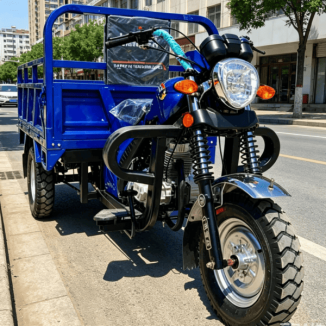
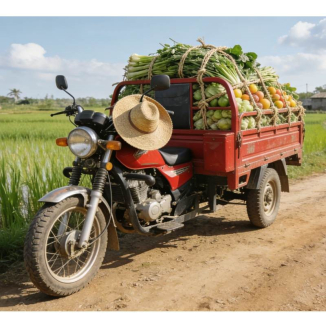
Seriously, the main thing that decides a diesel tricycle’s weight is what you’re gonna do with it. I see people mess this up all the time—they buy one without thinking about their daily grind, and it’s either too light (can’t haul squat) or too heavy (gets stuck on narrow farm roads). Let me make it simple: if you’re using it for light stuff—like moving veggies from your garden to the stand, or toting tools around the farm—you’re looking at 400 kg to 850 kg. But if you’re hauling heavy gear? That number goes up fast.Last month, I helped a guy down the road get a compact tricycle for his small farm. Empty, it’s only 400 kg—super easy to drive down those tight, bumpy lanes that bigger machines can’t touch. My buddy who runs a small brickyard? He’s got a ZY 165 II. That thing’s a tank. Empty, it’s 850 kg, ‘cause it’s got a reinforced frame that can haul 1500 kg of bricks no problem. Even some farm tricycles get heavy if you need more hauling power model, big farms love ‘em. Fully set up, it hits 1688 kg. Plain and simple: light work needs a light tricycle, heavy work needs something sturdier (and heavier).
2. The Engine Isn’t the Only Heavy Part—Other Stuff Adds Up Fast
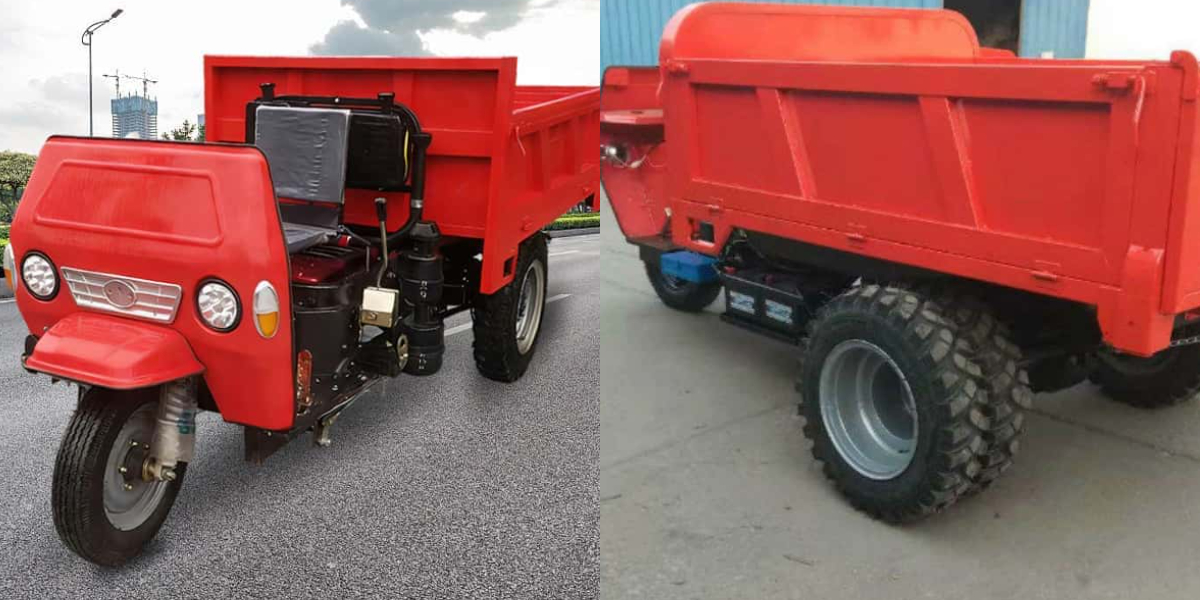
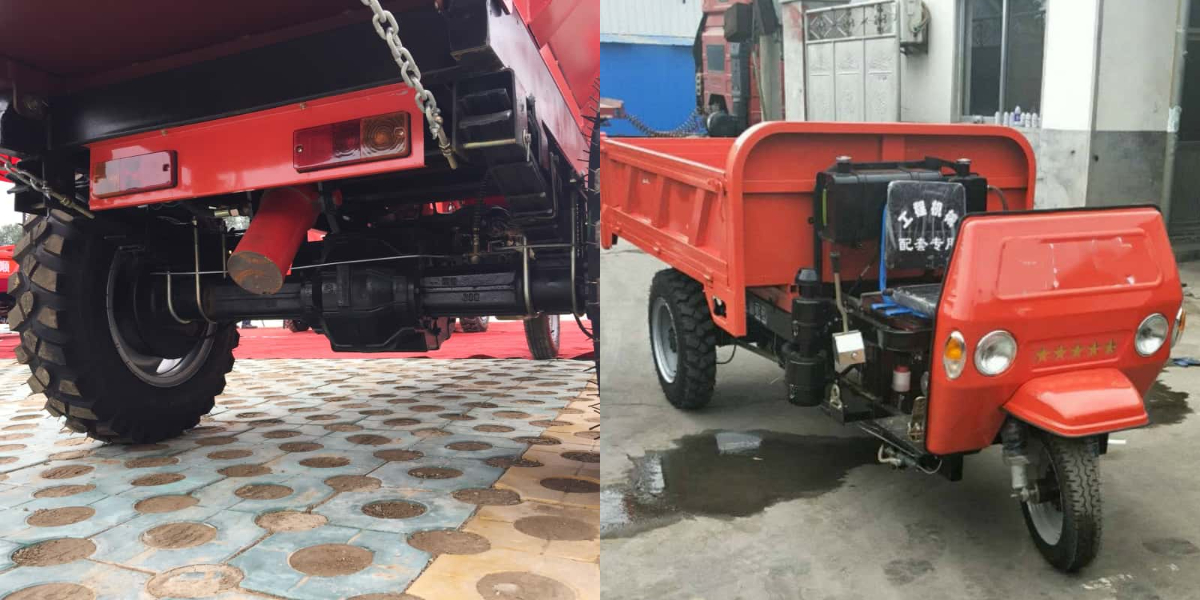
Most people think the diesel engine is the heaviest part, but that’s not even close. Yeah, the engine matters—your typical tricycle engine is 80 kg to 150 kg—but the other parts? They can weigh just as much, if not more. I’ve taken apart more tricycles than I can count, so I know which parts make the biggest difference. These aren’t random numbers—these are the specs I check every time I fix or sell one.First, the frame. A basic frame for light use is thin steel, maybe 100 kg tops. But industrial ones? They use thick 3mm steel plates. Its frame alone is 180 kg, and that’s before adding the engine or cargo box. Then the cargo box: a small open one (1400x900x400 mm) is only 50 kg, but a big reinforced dump box (2000x1200x500 mm)—the kind for dirt or gravel—can hit 120 kg. Tires too: small 400-12 front ones are 15 kg each, but heavy-duty 750-16 rear tires (for mining) are 30 kg apiece. Even brakes matter—regular oil brakes add 10-15 kg, vacuum-boosted ones (for heavy loads) add another 5-8 kg. Add all that up, and the parts besides the engine can be 200-300 kg. Weight’s not just the engine’s fault—it’s all the little (and big) parts combined.
3. Customizations Mess With the “Average”—Here’s How
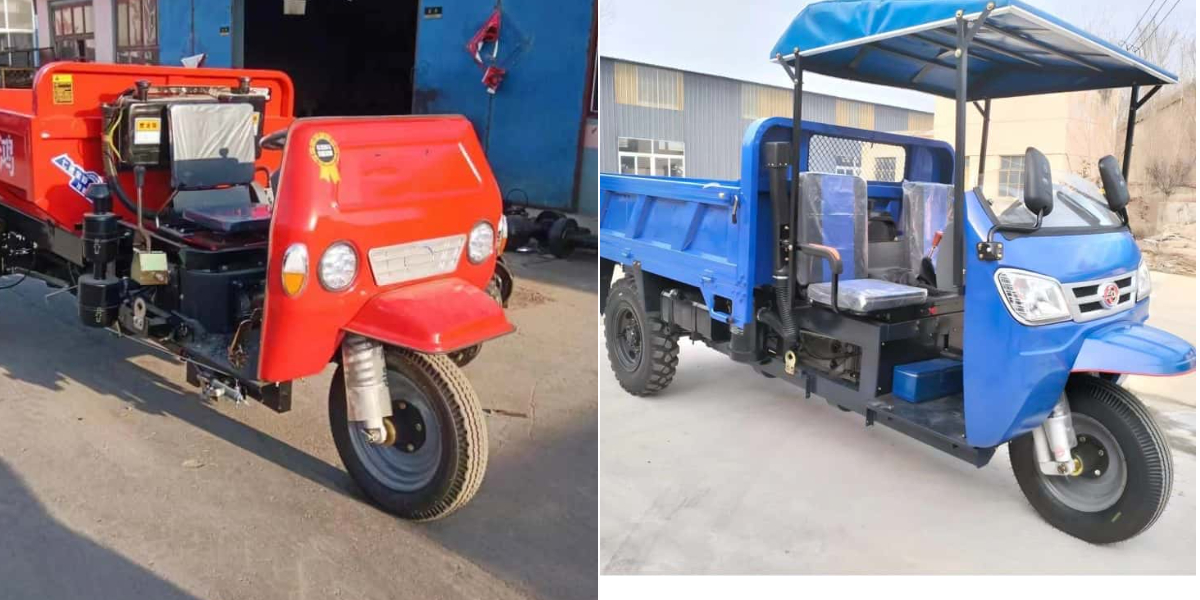
Diesel tricycles are way more customizable than people think. I get customers coming in every week asking for tweaks—some want a cab, some a bigger fuel tank, some a stronger axle—and every single one changes the weight. This is the stuff you won’t find in generic online guides, but it’s huge if you’re getting a tricycle made just for you. Let me break down the most common tweaks and how they affect weight.Adding a cab is the most popular. A basic open cab (just a roof, no doors) adds 50-70 kg. But a closed cab—with a windshield, doors, even heat (folks up north love these), like the Waw model—adds 100-120 kg. Last year, a customer had an 850 kg tricycle, added a closed cab, and it jumped to 950 kg. Reinforcing the rear axle is another big one: a standard half-floating axle is 40 kg, a full-floating one (for heavy loads) is 60 kg—20 kg extra right there. Even small changes count: upgrading from a 15L to 30L fuel tank adds 12 kg, a hydraulic dump system (so you don’t have to lift the cargo box) adds 30-40 kg.
Final Word: What’s the Real Average Weight?
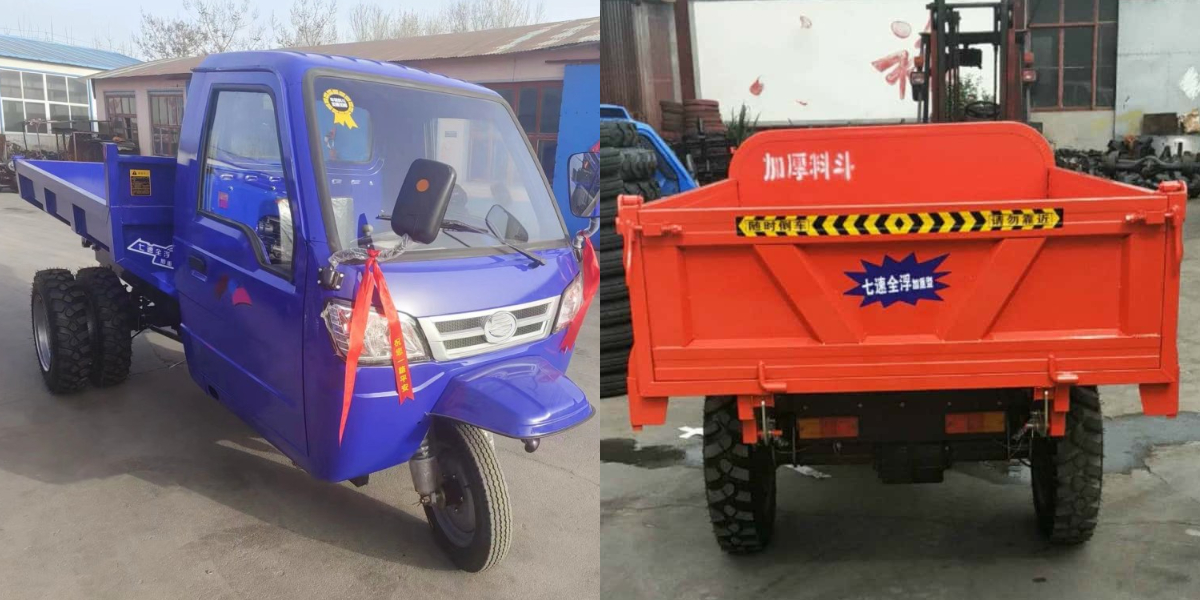
After five years with these machines, here’s the truth: construction diesel tricycle average 400 kg (small, light-use) to 1688 kg (heavy-duty, fully customized). For most people—farmers, small business owners, local haulers—the sweet spot is 520 kg to 1000 kg. Don’t just look at the number, though—weight affects everything: heavier ones burn more diesel, lighter ones handle narrow roads better, heavier ones carry more. Before you buy, check the empty (unladen) and full (gross) weight—those numbers tell you how it’ll work for your daily stuff.If you’re still unsure which weight is right, just think about your day-to-day. Need to drive down tight farm lanes? Go light (400-600 kg). Haul heavy cargo to job sites? Go heavy (850+ kg). Either way, knowing what affects weight helps you pick the right one—no guesswork, no wasting money on something that doesn’t fit.