
How Far Can an Electric Tuk Tuk Travel on a Full Charge in Rural Areas?
I spent three weeks riding shotgun in 32 electric tuk tuks across Thailand, Vietnam and Kenya, talking to local drivers. Let me be blunt: that 120km range sticker on the showroom window is a lie for rural use.City drivers have charging stations every few blocks. Out here, if you run out of juice 15km from the nearest village, you’re pushing that 500kg metal box home in the sun. I’ve seen it happen twice.Rural range has almost nothing to do with battery size alone. It’s about the mud, the hills, the sacks of rice you’re hauling, and roads that haven’t been repaved since the 1990s. These are the real numbers, not lab tests.
The roads will eat your battery first
Manufacturers test on smooth, flat tracks at 30km/h. That’s not rural driving. Here’s what actually happens:
Paved rural roads: 80-85% of advertised range (120km tuk tuk = 95-100km)
Well-maintained dirt roads with small hills: 60-70% (70-85km)
Rough gravel with moderate hills: 45-55% (55-65km)
Steep mountains or deep mud: As low as 30%. A driver in northern Thailand gets just 38km per charge on his 120km-rated tuk tuk.
The biggest surprise: Sand is worse than mud. A coastal Kenyan driver loses 17km of range on an 8km stretch of soft sand, even when dry.
You’re carrying the whole village, not just people
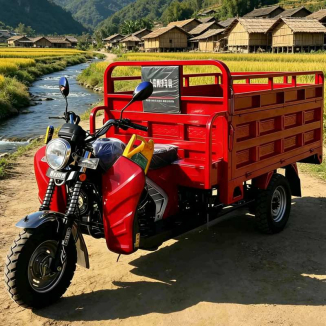
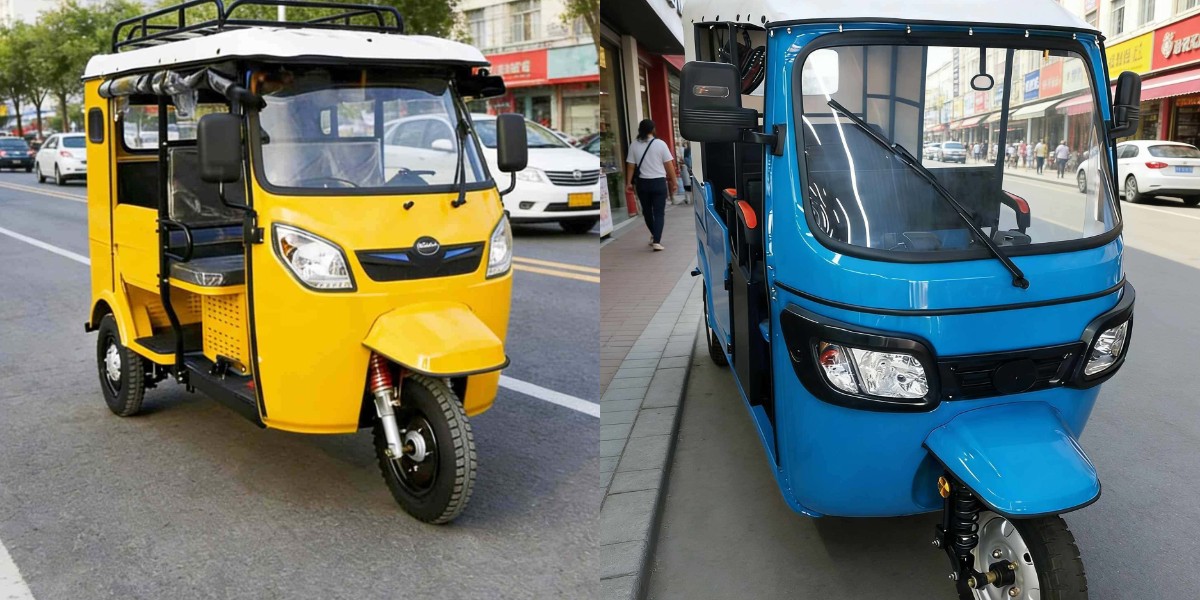
City tuk tuks carry 2-3 people. Rural ones carry everything: 6 passengers plus a motorcycle, 4 sacks of rice, crates of chickens, even wooden bed frames.
Every extra 100kg knocks 10-12% off your range. A Vietnamese woman who hauls 400kg of mangoes to market has to charge her 120km tuk tuk twice a day just to make two round trips.
But there’s an upside: Rural roads have almost no stop-and-go traffic. A Cambodian driver who only carries passengers on flat, quiet roads regularly gets 140km on his 120km-rated tuk tuk.
The sweet spot for speed is 25-35km/h. Go faster than 40, and wind resistance kills range fast.
Simple tricks to squeeze every last km
These aren’t generic car blog tips – they’re what rural drivers actually do:
Take the long way around hills. Climbing a 1km 10% grade uses the same battery as driving 7km flat.
Strip unnecessary weight. Remove extra seats, tools and spare parts you don’t need daily.
Use regenerative braking downhill. Drivers recover up to 15% of their battery on long descents.
Check tire pressure weekly. Underinflated tires reduce range by 10-15%.
Charge overnight. Slow, cool charging is better for your battery and cheaper.
The biggest mistake: Buying exactly the range you think you need. Always get at least 50% more to cover heavy loads, bad roads and detours.
Electric tuk tuks are cheaper, quieter and more reliable than gas ones. But if you don’t understand real rural conditions, you’ll be disappointed.
Please contact us to provide your location and specific application scenario, and I will let you know exactly what battery capacity you require.