
Do Gasoline Three-Wheelers Work Well on Rough Rural Roads?
If you’ve ever loaded 800kg of freshly harvested yams into a vehicle bed at 4 a.m., needing to cross 25km of rain-soaked laterite tracks, rutted clay paths, and steep rock-strewn inclines to make the district market before sunrise, you’ve asked this exact question.After 12 years working directly with smallholder farmers, rural traders, and transport operators across West and East Africa, I can give you a straight, no-fluff answer: Yes. Not just “they work” — when you pick a workhorse model built for real rural use, gasoline three-wheelers are often better than 4x4 pickups, electric trikes, or diesel vans for 90% of the day-to-day work that keeps rural communities running.But their ability to handle unforgiving off-pavement terrain isn’t about flashy marketing specs or big horsepower numbers. It comes down to three brutally practical, terrain-specific things most online reviews never talk about — the same details that have made these trikes the backbone of rural transport across the developing world.
It’s Not About Horsepower. It’s About Low-End Torque That Gets You Out Of Mud Ruts At 2000 RPM
Let’s get one thing straight first: Top speed and peak horsepower mean absolutely nothing on rural roads. Zero. I’ve seen 300hp pickups get stuck in a clay rut that a beat-up 200cc gasoline trike crawled right out of. I’ve watched electric trikes spin their wheels and burn out their motors trying to climb a 20-degree incline with a full load, while a gasoline trike pulled the same weight up without even revving the engine hard.
What you actually need for rough rural terrain is low-end torque — the pulling power that hits hard at low engine speeds, not when you’re redlining the throttle at 6000 RPM. That’s the secret superpower of heavy-duty gasoline three-wheelers, and it’s exactly what makes them perfect for mud, hills, and loose gravel.
Unlike electric trikes, which dump all their torque at once (spinning wheels on slippery mud and frying motors under sustained load), or three wheeler cargo motorcycle that need to rev high to build any real power, work-focused gasoline trikes (150cc to 250cc, the ones you see in every rural village) are tuned to put out 80% of their max torque at just 1500-2500 RPM.
What does that mean for you, out on a remote track with a full load of crops? It means you don’t have to slam on the throttle and pray you don’t dig yourself deeper into the mud. A steady, controlled push is all it takes to pull out of a rut, climb a steep hill, or crawl over loose rocks without slipping, straining the engine, or snapping a chain. Shaft-driven models are even better — no chain to slip, break, or get clogged with mud and sand, so every bit of that torque goes straight to moving you forward, not wasting away on a broken drivetrain.
This isn’t just a technical detail. It’s the difference between getting your harvest to market before it spoils, and being stranded for hours on a road with no cell service, no help, and a load of produce going bad by the minute.
A Rugged, Load-Balanced Build That Doesn’t Fall Apart Hauling 800kg Up A Rock-Strewn Hill
Any cargo gasoline tricycle can handle a rough road when it’s empty. But rural transport is never about empty runs. You’re hauling fertilizer to your farm at planting season. You’re carrying cement and roofing sheets to build a home in a remote village. You’re moving livestock to the market, or bringing a full harvest back home. The real test of a rural workhorse is how it performs on rough terrain when it’s fully loaded — and this is where gasoline three-wheelers run circles around almost every other affordable option.
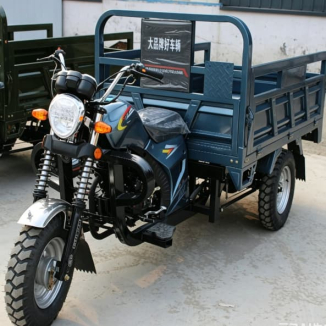
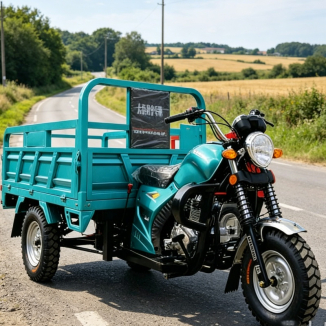
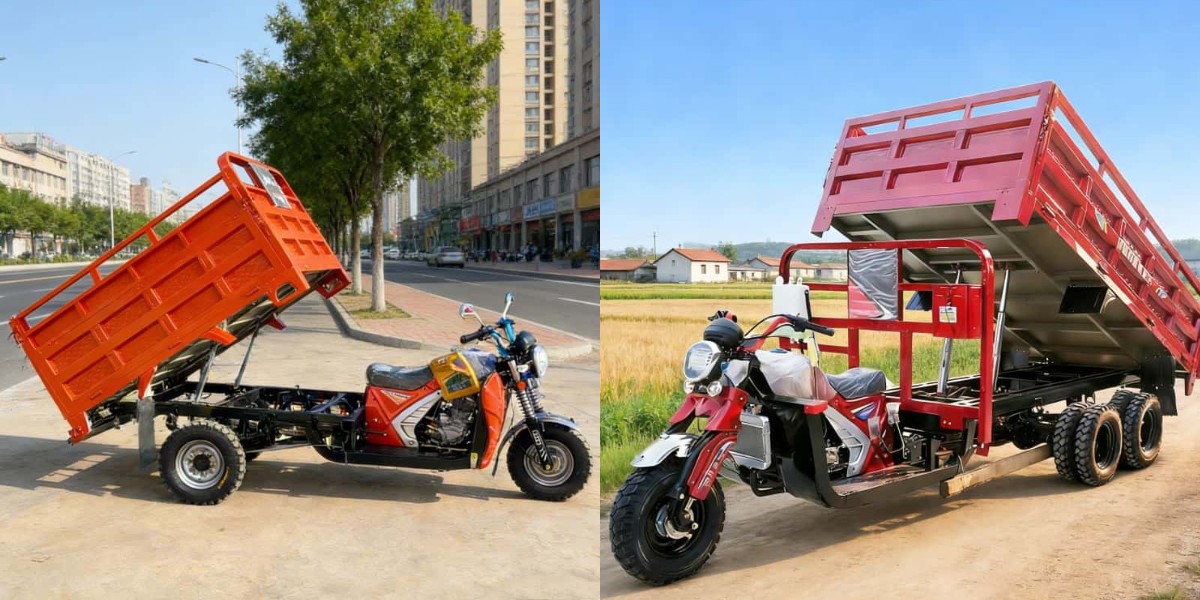
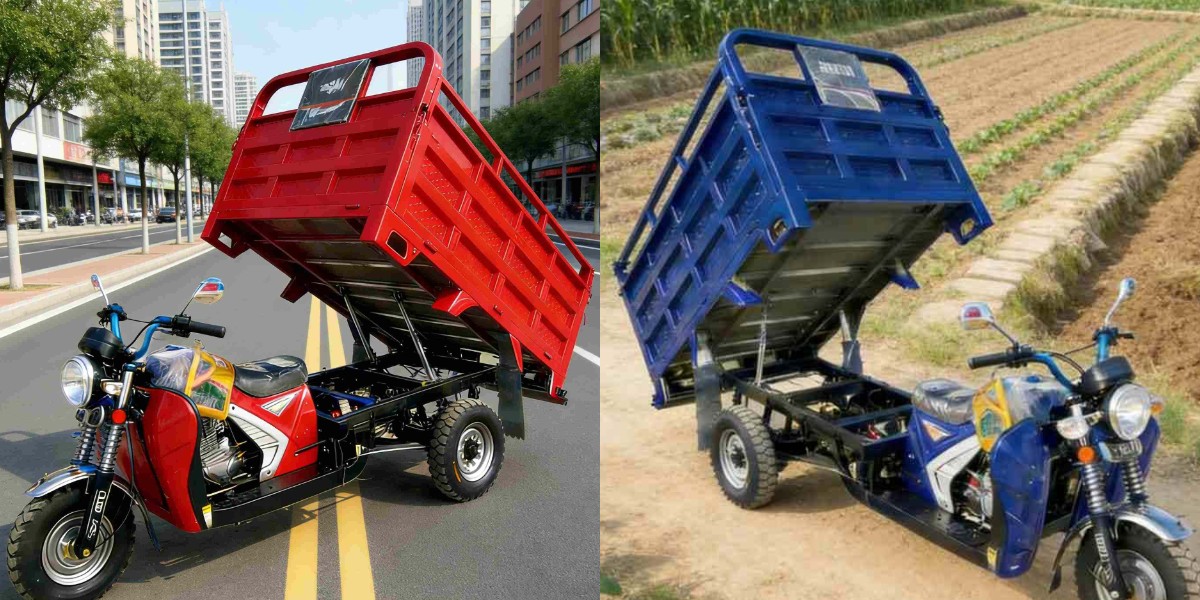
Unlike passenger cars or even most pickups, which are built for smooth pavement and light, occasional loads, heavy-duty gasoline trikes are built around a reinforced high-strength steel chassis, with a low center of gravity that keeps the vehicle stable even when the cargo bed is packed to the brim. Most work-focused models have 180-220mm of ground clearance — that’s higher than many mainstream SUVs. What does that mean in practice? You can drive over rocks, deep ruts, tree roots, and shallow flooded sections without scraping the undercarriage or getting high-centered — a problem that strands more low-riding pickups and vans on rural roads than anything else.
Then there’s the suspension. Forget the soft, comfort-focused suspension you get on a family car. Gasoline trikes use heavy-duty leaf spring rear suspension, built to absorb non-stop bumps and jolts without sagging, even when you’re carrying a 1000kg load. It doesn’t make for the smoothest ride on pavement, but on rough rural roads? It’s a game-changer. It cuts down on wear and tear to the frame and body, so the trike doesn’t rattle apart after a few months of daily use on rocky tracks. Compare that to electric trikes, which often bend their frames or damage their battery packs under heavy load on rough terrain — a repair that costs more than the trike is worth, half the time.
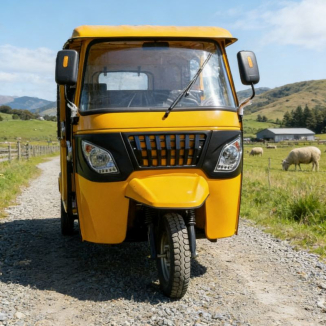
Even the three-wheel layout itself is a huge win for narrow rural roads. Most rural tracks are barely wide enough for one vehicle, with steep drop-offs or thick brush on either side. A gasoline trike’s compact footprint and tight turning radius let you navigate these paths far easier than a bulky 4x4 pickup, while still giving you way more stability and load capacity than a two-wheeled motorcycle. I’ve seen pickups have to back up 2km to find a spot to pass an oncoming vehicle, while a trike just squeezes right by without breaking a sweat.
The Most Underrated Superpower: You Can Fix It At The Village Shop, No Special Tools Needed
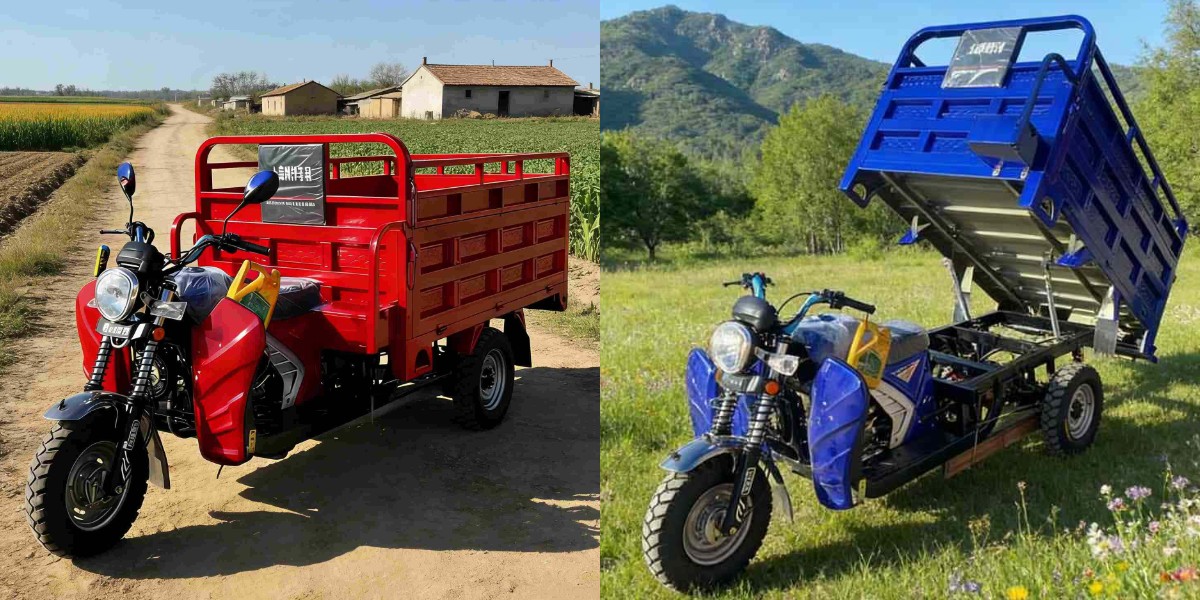
Here’s the hard, unspoken truth about rural transport: The most powerful, well-built vehicle in the world is completely useless if it breaks down and you can’t fix it. In remote rural communities, where the nearest certified mechanic is 50km away, and dealership service centers only exist in big cities, serviceability isn’t a “nice to have”. It’s the single most important factor in whether a vehicle actually works well long-term. This is the biggest, most underrated advantage of gasoline three-wheelers, and it’s why they’ve outlasted every other transport option in off-grid rural areas.
Final Verdict
So, do gasoline three-wheelers work well on rough rural roads? For the vast majority of rural farmers, traders, and operators, the answer is a resounding yes.
They aren’t built for high-speed highway driving. They won’t give you the luxury of a brand-new 4x4 pickup. But for the person who needs a reliable, affordable, hardworking vehicle that can go almost anywhere, carry almost anything, and keep running even when there’s no mechanic around for 50km? A well-built gasoline three-wheeler is unmatched.
It’s not just a vehicle. It’s a tool that powers livelihoods, connects remote communities to markets, and keeps rural life moving — even on the roughest, most unforgiving roads you can imagine.