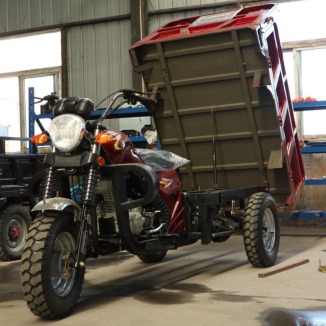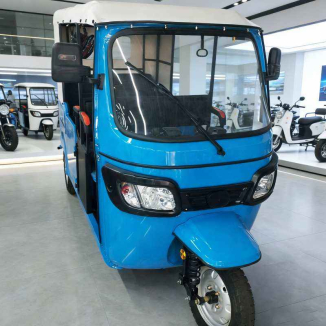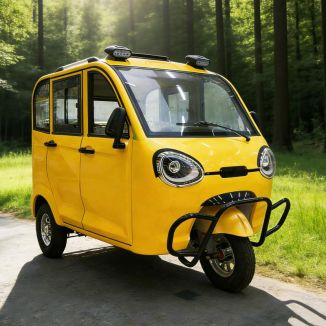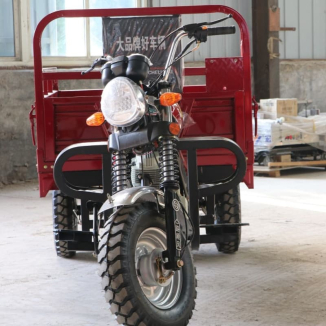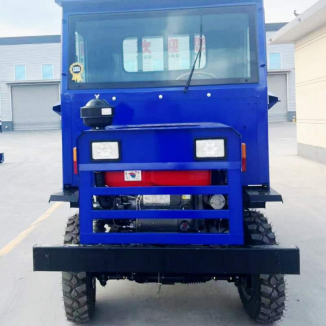

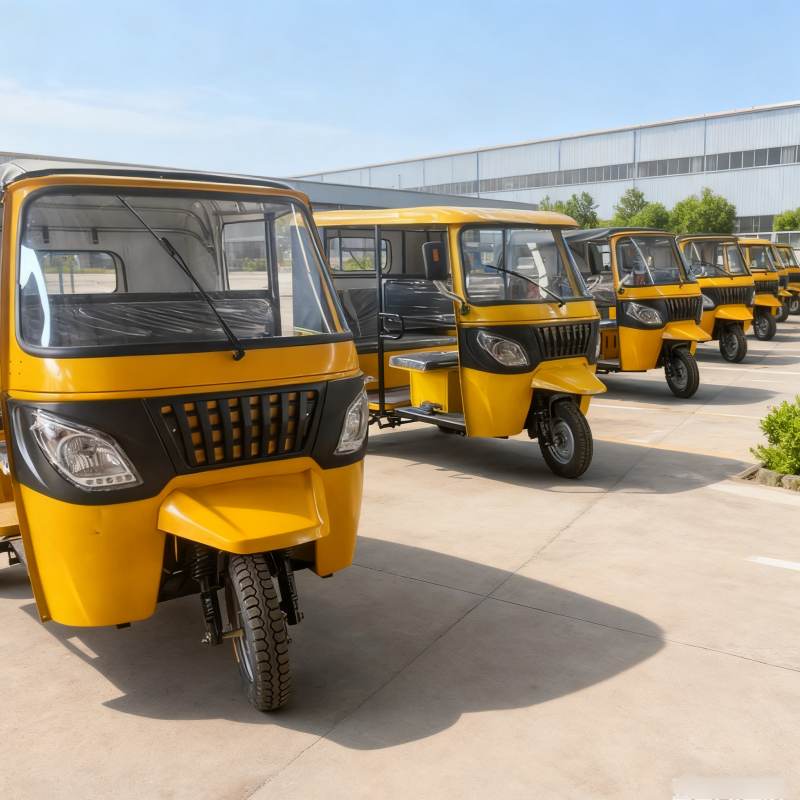
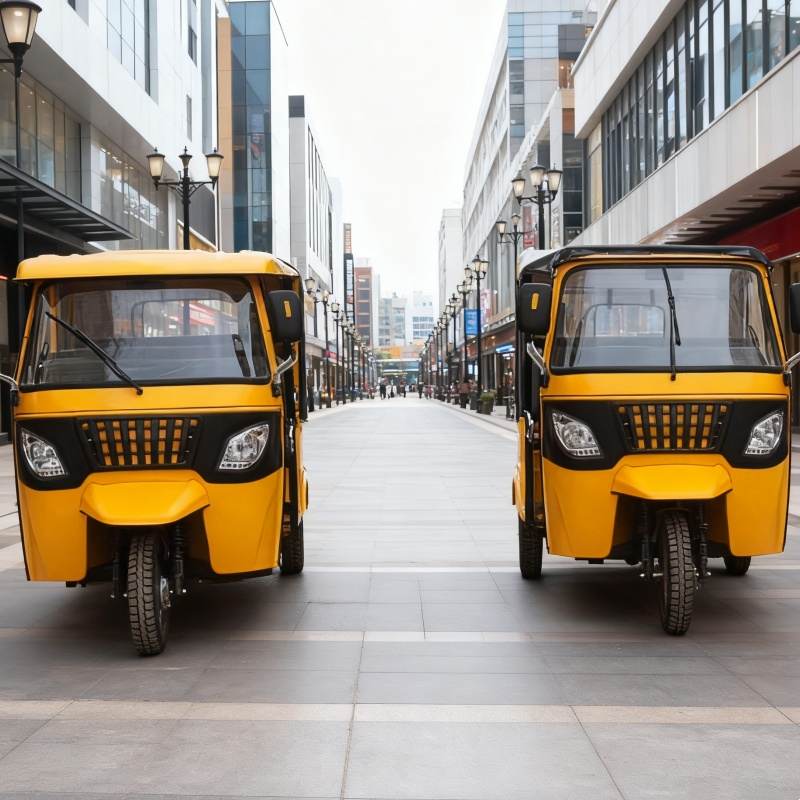
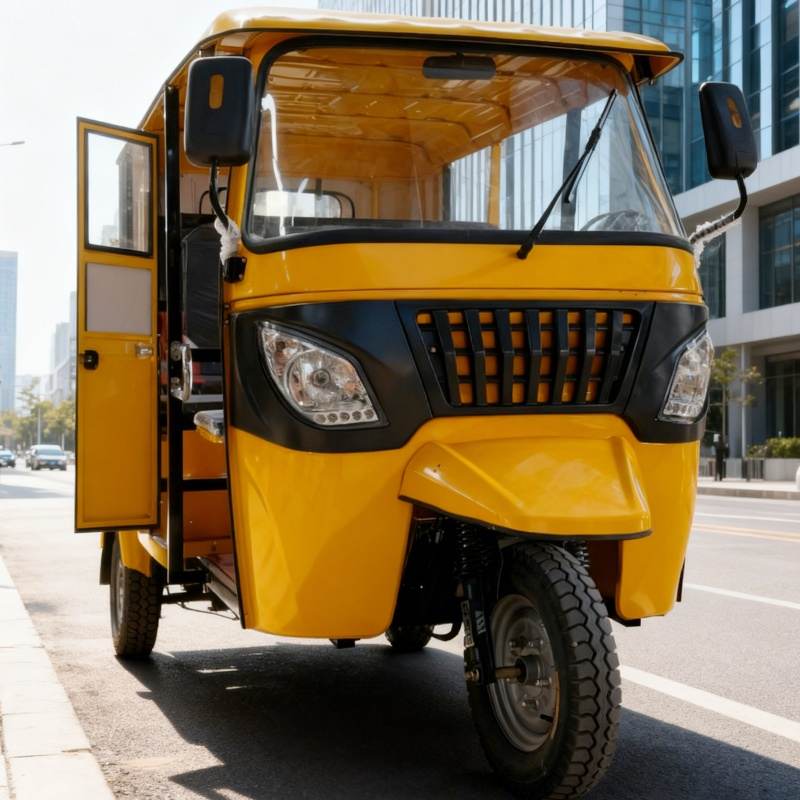
Electric tricycle rickshaw
High-power Electric Drive: Zero emission electric tuk-tuk with long endurance for eco-friendly travel
Reinforced Shock Absorption: Smooth ride for passenger tuk-tuk even on uneven dirt roads
Steel Reinforced Body: Durable for 3-wheeler tuk-tuk, anti-collision & anti-rust for harsh environments
Perfect for Short-distance Shuttle: Passenger tuk-tuk ideal for market, station and community transfer
If you’re in the market for electric tricycle rickshaws—whether for your fleet, tourist spot, or last-mile delivery—you’ve probably noticed most suppliers just flood you with generic specs and hype. We get it: you don’t care about flashy buzzwords. You care about picking a rickshaw that won’t break down after 6 months, won’t eat into your profits with high maintenance costs, and will actually show up on time so you can launch or scale your business without delays. This guide is built on 10+ years of working with buyers like you—we cut through the noise, talk about real problems you’ll face, and help you pick the right model by showing you what works (and what doesn’t) in real life.
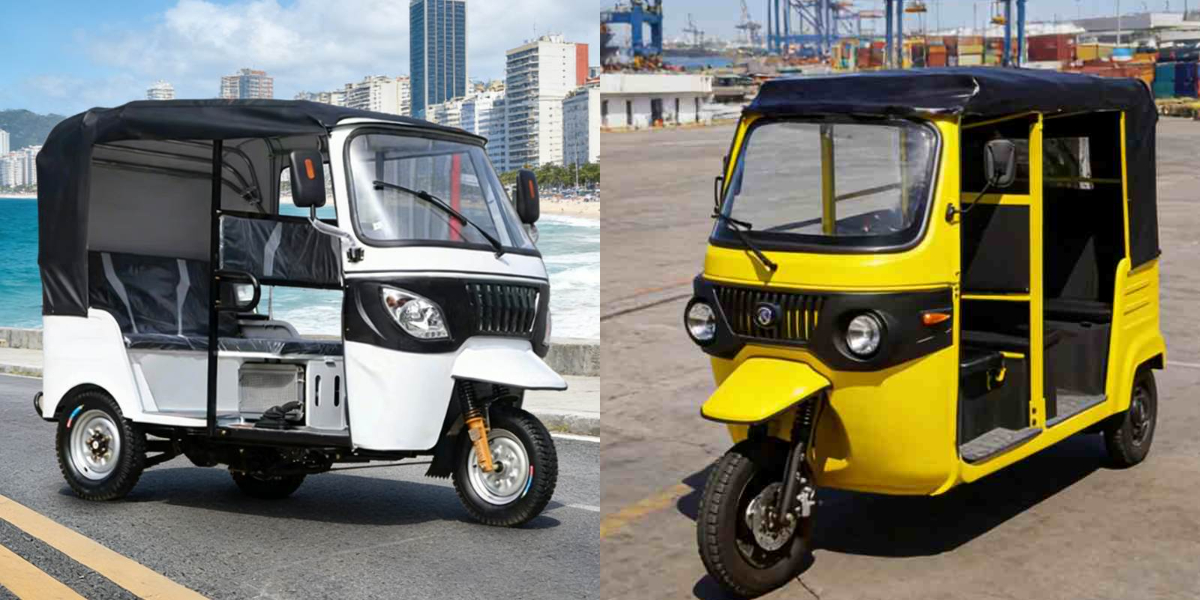
Product Parameters
We’re not going to just list numbers and walk away. Every spec here ties directly to how much money you’ll make, how often you’ll have to fix things, and whether the auto three wheeler will hold up to your daily grind. This is the stuff we explain to buyers on our WhatsApp calls—no jargon, just straight talk about what each number means for your business.
Parameter | Specification |
Motor Power | 1500W / 2000W (Optional) |
Battery Type & Capacity | Lead-Acid (12V 100Ah) / Lithium-Ion (12V 80Ah) (Optional) |
Max Speed | 25km/h (Adjustable up to 30km/h with customization) |
Max Load Capacity | 600kg (1500W) / 800kg (2000W) |
Charging Time | 8-10h (Lead-Acid) / 4-6h (Lithium-Ion) |
Range per Charge | 50-60km (Lead-Acid) / 70-80km (Lithium-Ion) |
Wheelbase | 1800mm |
MOQ (Minimum Order Quantity) | 10 Units (Standard Models); 50 Units (Custom Models) |
Lead Time | 15-20 Days (Standard Models); 30-40 Days (Custom Models) |
Product Details
Every gasoline tricycle is built to last—we use parts we’d be happy to put in our own fleet. Below is exactly how we make them, and the shortcuts other factories take (so you can spot a bad deal).
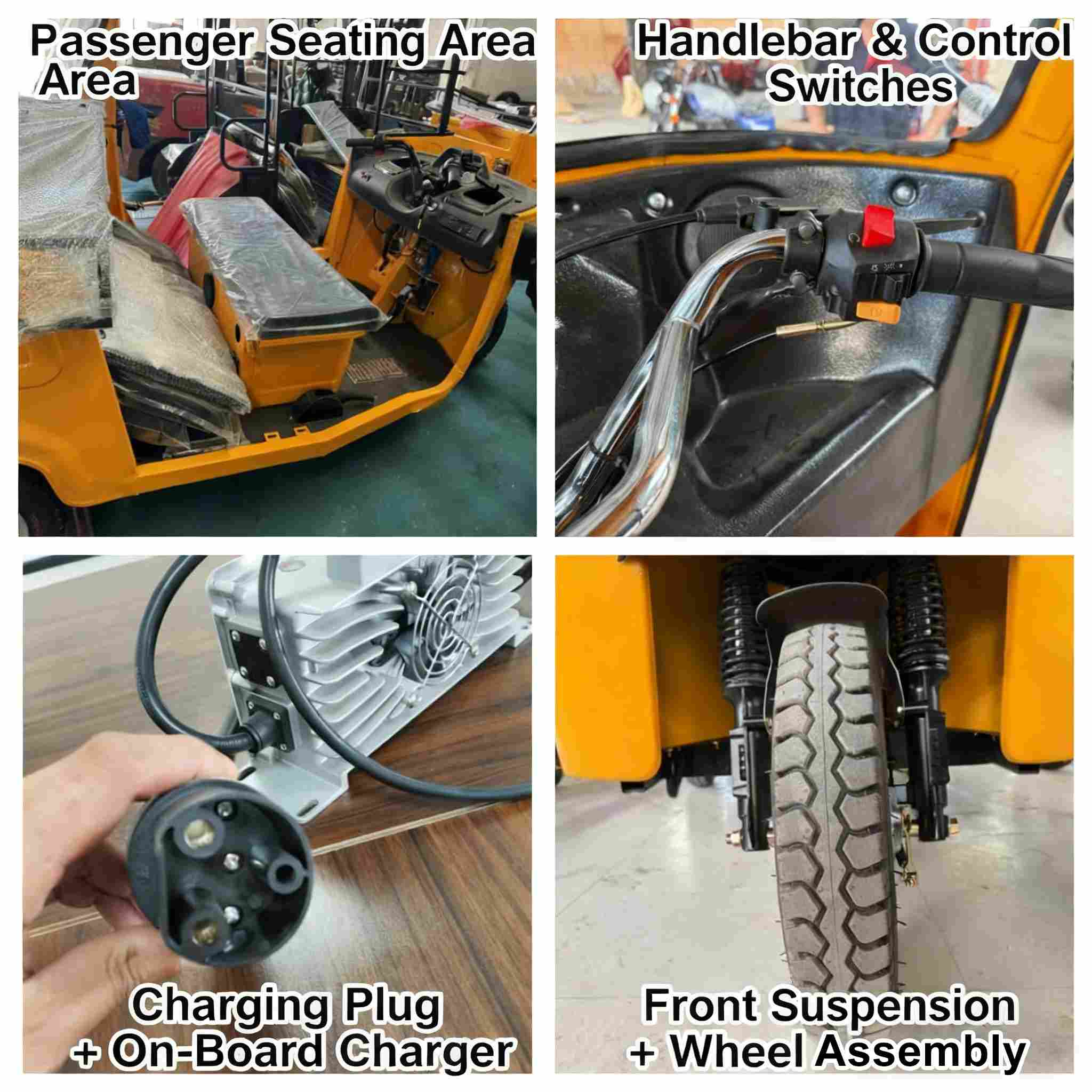
•Chassis (Frame): We use 1.5mm thick high-carbon steel—cheap factories use 1.0mm, which bends or cracks under heavy loads. Our process: Cut the steel → Weld with robots (manual welding is uneven and breaks) → Sandblast to remove rust → Apply 0.8mm anti-rust coating (double the industry average) → Paint. That anti-rust coating is crucial—we have rickshaws in coastal Thailand (super humid) that are 4 years old with no rust. Cheap factories skip the sandblasting and use thin coating—rust shows up in 6 months.
•Motor: Brushless DC motors with copper windings—aluminum windings (used by cheap brands) overheat and burn out. Every motor gets a 2-hour load test at 120% capacity—we run it as hard as possible to make sure it can handle sudden spikes (like 3 passengers up a slope). We had one supplier send us motors without this test—80% burnt out in 3 months. We never cut this corner.
•Battery: Lead-Acid from Chaowei (top 3 in China), Lithium-Ion from CATL (the best in the business). We check every battery’s voltage and capacity before installing it—no "no-name" batteries (50% fail in the first year). One of our buyers tried a cheaper factory that used no-name batteries—he had to replace 30% of them in 6 months. We switched him to Chaowei, and the failure rate dropped to 2%.
•Tires: 3.00-12 tubeless tires with 8mm tread and an anti-puncture layer. They work on asphalt and gravel—perfect for mixed routes. Cheap factories use 6mm tread with no anti-puncture layer—we’ve seen buyers spend $50-$100 per flat tire, plus lost revenue while the rickshaw is down. Our tires last 18-24 months; cheap ones last 6-8.
•Seats: 5cm thick high-density foam with waterproof PVC. Drivers work 8-10 hours a day—thin 3cm foam (used by cheap brands) gets hard and causes back pain. Our seats are easy to clean (wipe with a damp cloth) and hold up to spills (critical for tourist rickshaws). We had a resort buyer tell us guests often comment on how comfortable our seats are—small detail, but it keeps customers happy.
Product Usage Scenarios
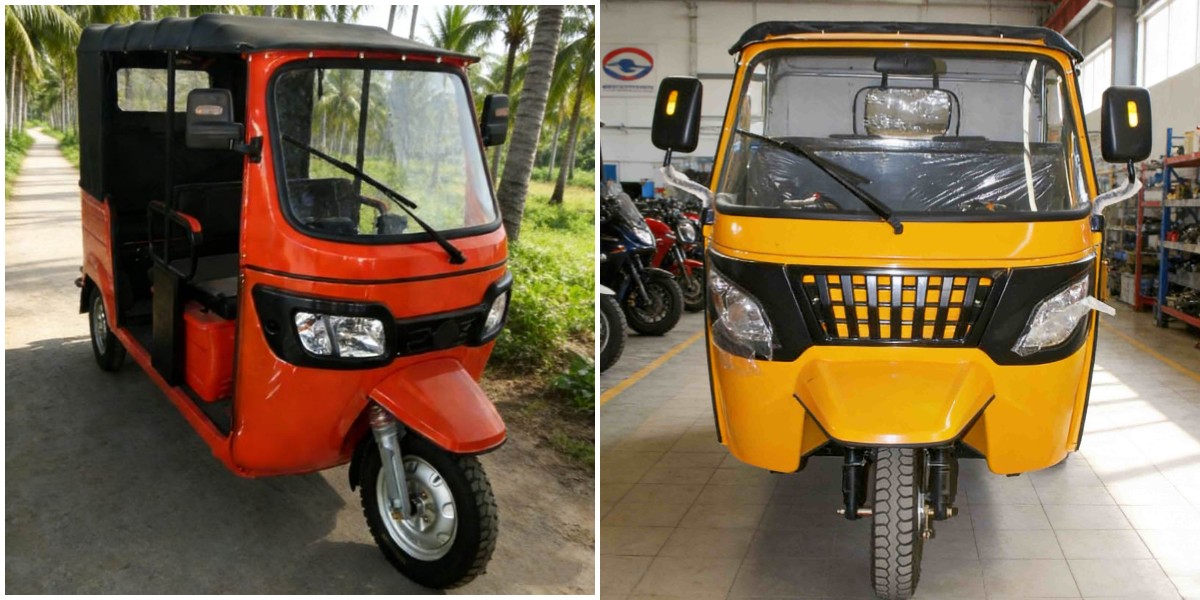
•Urban Passenger Transport: Perfect for short trips (1-5km) in cities—subway to home, bus stop to office, etc. The 25km/h speed is legal almost everywhere, and it’s quiet enough for residential areas. We have a fleet buyer in Delhi with 200 units—he says the 2-3 passenger capacity maximizes revenue (more passengers per trip than a bike, cheaper than a taxi).
•Tourist Resorts: Our most popular use case. Resorts in Thailand, Bali, and Kenya love it—quiet, clean, and adjustable speed (15-25km/h) keeps guests safe. The waterproof seats and anti-rust chassis hold up to beach humidity. One resort in Thailand uses 50 units—guests prefer them over golf carts because they’re more intimate.
•Last-Mile Delivery: Great for groceries, parcels, or small furniture (300-600kg) in cities or suburbs. The 50-80km range covers most daily routes, and the narrow chassis fits down tight alleys (we tested it in Mumbai’s back streets). A logistics buyer in India uses 20 units—he cut delivery costs by 40% compared to diesel vans.
Service Commitment
After-sales support is where most factories fail. We’ve had buyers tell us horror stories: waiting weeks for parts, no one answering calls, being told "it’s not our problem." That’s not how we do business. When you buy from us, we’re with you long after your rickshaws arrive.
Motor: 1-year warranty—covers manufacturing defects (not if you overload it or crash it). We’ve had a few motors fail (less than 1% of units), and we replaced them for free—no questions asked.
Battery: 1-year for lead-acid, 1-year for lithium-ion—covers if capacity drops more than 30% within the warranty period. For example, a Thai buyer’s lithium-ion battery only held 60% charge after 1 year—we sent a new one for free.
Chassis: 1-year warranty—covers rust and frame cracks from manufacturing defects. We had a coastal buyer’s chassis show rust after 2 years (our mistake—we missed a spot in coating)—we replaced the entire chassis for free.
Other Components (tires, seats, brakes): 6-month warranty—covers manufacturing defects. A Nigerian buyer’s tire had a defect (split sidewall) after 3 months—we sent 2 new tires (one for replacement, one spare).
Replacement Parts: We keep all key parts (motor, battery, brakes, tires) in our factory and 12 global service centers (India, Nigeria, Thailand, etc.). Parts ship in 3-7 days—air shipping for urgent needs. Existing buyers get a 15% discount on parts—we want to keep your rickshaws running cheaply.
Maintenance Training: Free training (in-person or video) for your team. We teach you how to charge the battery, adjust brakes, check tire pressure, and fix small issues. A Vietnamese buyer’s team took the training, and they cut repair costs by 40%—no more paying technicians for simple fixes.