

Brazilian customers test the tuk-tuk on-site!
Why Brazilian Customers Came to Us: Tired of Generic Tuk-Tuks That Fail
This isn’t just any transport company—they’re the backbone of connectivity for small businesses and communities across southeastern Brazil. Their drivers spend 12+ hours a day juggling it all: shuttling office workers through Belo Horizonte’s rush hour, hauling crates of fresh fruit from rural farms to city markets, even ferrying tourists to small beach towns on weekends. Mixed use is just how it works in Brazil, and their old tuk-tuks? They were dropping like flies.
They’d tried imported, off-the-shelf models before—big mistake. Those tuk-tuks stalled halfway up the steep hills outside Ouro Preto, rusted out in 6 months from the coastal humidity, and when a part broke? They’d wait 4+ weeks for imports to arrive from Asia. Drivers were losing money, customers were getting frustrated, and the company was tired of wasting cash on vehicles that weren’t built for Brazil. That’s when they found us—they heard we don’t just sell tuk-tuks; we build ‘em for the specific chaos of each country. And they wanted to see it for themselves. No glossy brochures, no fancy sales pitches—just real tests, with their own drivers behind the wheel.
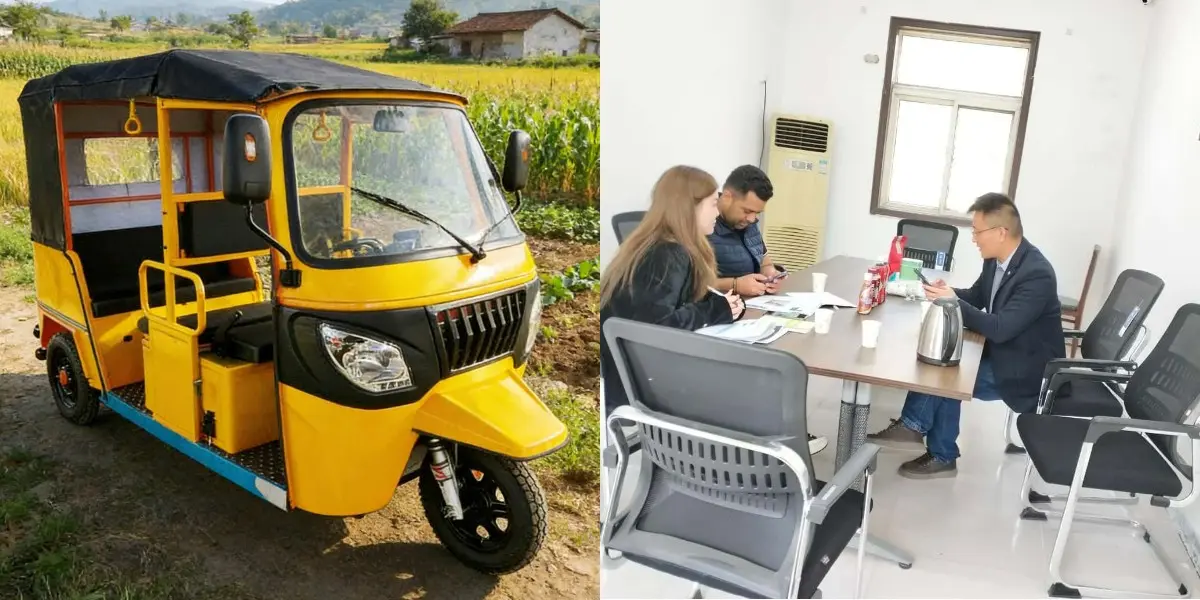
Customer Demand: Non-Negotiables for Brazil’s Roads
When they sat down with us, they didn’t mess around with “nice-to-haves.” These were deal-breakers, straight from the drivers who know Brazil’s roads best:
Hill-Climbing Power for Brazil’s Mountains: The Serra do Mar and Serra da Mantiqueira have roads that make even experienced drivers nervous—steep inclines, tight curves, and thin air at higher elevations. Their old tuk-tuks would stall halfway up, leaving drivers stuck with a load of cargo and angry passengers. They needed an engine tuned for Brazil’s hills—enough torque to climb fast, even when packed with 4 passengers and a crate of mangoes.
Humidity & Rain Protection: Brazil’s rainy season (November to March) soaks everything, and the coastal humidity eats through unprotected metal like crazy. They needed heavy-duty rust proofing, waterproof wiring, and mud guards that could handle the slop—no more electrical shorts or rusted-out bodies after a few months.
Easy to Fix with Local Parts: Rural Brazil doesn’t have mechanics with fancy tools or specialized training. If a part breaks in a small town like Tiradentes, the driver needs to fix it that day—not wait weeks for imports. The tuk-tuks had to be simple, with parts that match what local auto shops already stock. If a mechanic can fix a small pickup truck, they should be able to fix these tuk-tuks.
Fuel Efficiency That Saves Drivers Money: Brazil’s fuel prices are all over the place, and most drivers pay for fuel out of their own pockets. A fuel-hungry tuk-tuk means less money for their families. They needed an engine that squeezed every last kilometer out of each liter—no waste, no extra costs.
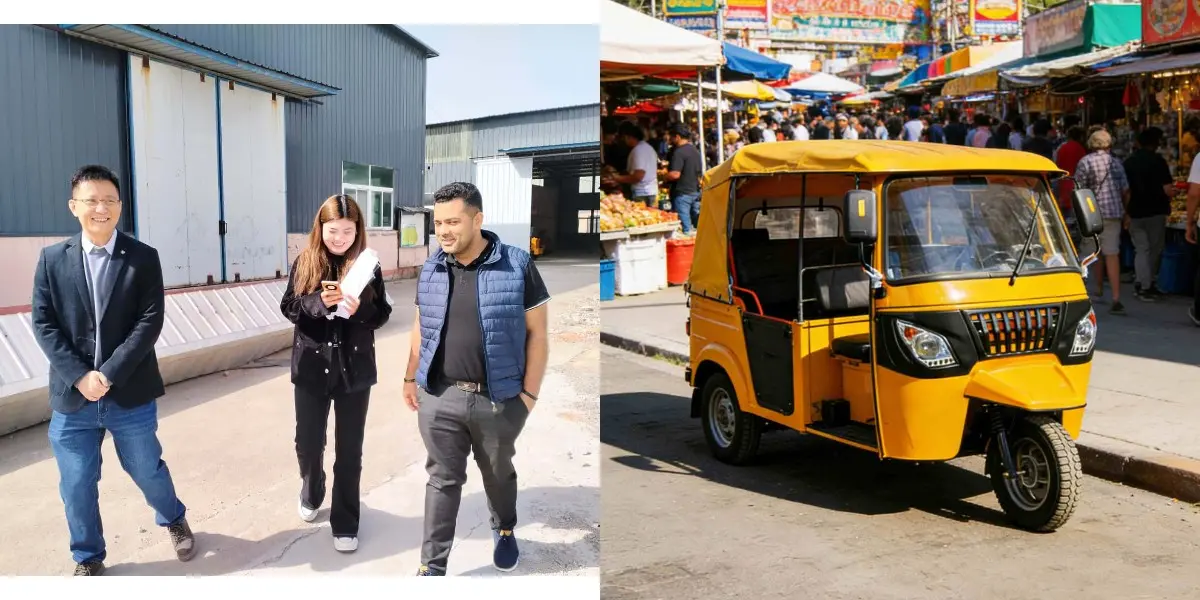
On-Site Testing: Brazilian Drivers Took Charge (And Gave Us Brutal, Perfect Feedback)
We didn’t just let them test our tuk-tuks—we let them run the show. They brought 4 of their most senior drivers (guys with 15+ years behind the wheel in Brazil) and 1 technical specialist. Carlos, their lead driver, had a saying: “If it works for me in Minas Gerais, it works for anyone.” We listened.
First, we built a test track that felt like home for them. We graded a steep, gravel-covered hill to mimic the roads outside Ouro Preto (we even adjusted the air pressure to match the altitude there), dug out a muddy stretch to test rainy season performance, and paved a bumpy, pothole-ridden section just like the rural dirt roads they drive daily. We even set up a small repair station with the same tools a local Brazilian mechanic would have—no fancy equipment, just the basics.
The testing was brutal—and exactly what we needed. Carlos took the first prototype up the steep hill, hit the gas, and shook his head. “Too slow,” he said, switching between Portuguese and broken English. “We need more power to pass trucks on the climb—otherwise, we lose time, we lose passengers.” Our engineers grabbed their tools, tweaked the carburetor on the spot, and boosted the low-end torque. He took it up again, grinned, and gave us a thumbs up. “That’s it—this one won’t stall on me.”
Mariana, another driver, pointed out the mud guards: “Too small. Mud will splash passengers, and rust the body in 6 months.” We swapped them for heavier, wider guards right then and there. They piled sacks of sand into the back (to mimic crates of fruit) and took it over the potholes—suspension sagged too much. We upgraded the springs that afternoon.
Then came the repair test. We told their technical specialist, João, to take the engine apart and put it back together—no instructions, just his own tools. He finished in 45 minutes, laughing. “Local mechanics can do this in 30,” he said. “Perfect. No more waiting for parts—we can fix these anywhere in Brazil.”
Every tweak came from their real daily struggles—not our assumptions. This wasn’t testing; it was building a tuk-tuk with them, for their roads. They didn’t just test our vehicles—they helped design them.

The Outcome: A Big Order, and a Customer Who Trusts Us
After two days of testing, their fleet manager, Rodrigo, sat down with us. He didn’t need to think about it—he pulled out his phone and called his office. “We’re signing,” he said. “These tuk-tuks are built for Brazil. Not for some generic market—for our roads, our drivers, our customers.”
No delays, no last-minute haggling. They signed off on the tests that afternoon, cut the full payment the next day. The first 150 custom tuk-tuks are already loaded onto a cargo ship, heading to Santos Port—ready to hit Brazil’s roads in a few weeks. Once they land, they’ll be distributed to drivers in Belo Horizonte, Ouro Preto, and Tiradentes—on the road within a week.
Rodrigo summed it up best before they left: “We’ve bought imported tuk-tuks before. They break, they rust, they leave our drivers stranded. You listened to us—you built something that works for Brazil. Our drivers will make more money, our customers will be happier, and we’ll grow. That’s all we wanted.”