
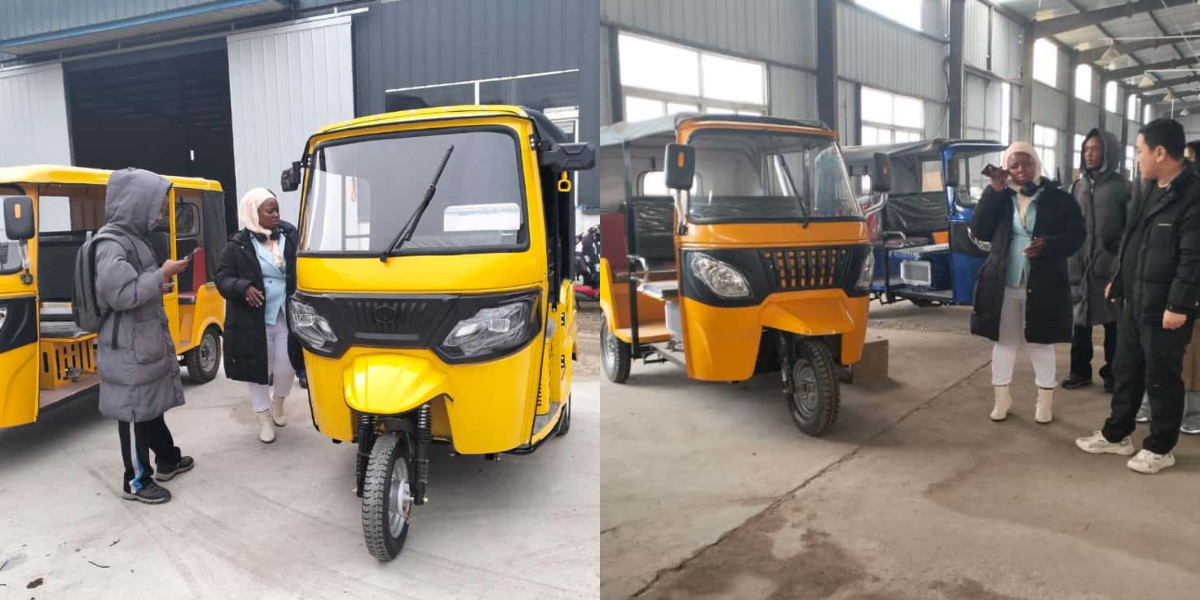
Liberian customers test the tuk-tuk on-site!
Why Liberian Customers Came to Us: Tired of Generic Tuk-Tuks That Fail
This isn’t just any transport company—they’re the lifeline of movement for small businesses, families and communities across Monrovia, Nimba and Bong County in Liberia. Their drivers spend 12+ hours a day on the move: shuttling commuters through Monrovia’s flooded streets, hauling sacks of rubber, rice and farm goods from rural villages to city markets, and even transporting patients to clinics in remote rainforest areas. Multi-purpose use is non-negotiable in Liberia, and their old tuk-tuks? They were breaking down nonstop.They’d bought generic imported models before—total disaster. Those tuk-tuks got stuck in deep mud after one rainstorm, overheated in 40°C daytime heat, and rusted through in months from coastal humidity and floodwater. When a part broke? They waited 3–6 weeks for shipments from Asia. Drivers lost income, communities were stranded, and the company was fed up with wasting money on vehicles not built for Liberia’s extreme conditions. That’s when they found us—they heard we don’t just sell tuk-tuks; we engineer them for the unique challenges of each country. And they came to see it for themselves: no brochures, no sales talk—just real tests, with their own drivers in control.
Customer Demand: Non-Negotiables for Liberia’s Roads
When they met us, they listed only hard requirements—from drivers who know Liberia’s roads better than anyone:
Mud & Flood Survival
Liberia is the “Rain Capital of Africa,” with up to 5 meters of rain yearly. Roads turn to deep mud, and city streets flood over wheel height in hours. Generic tuk-tuks stall or sink immediately. They needed high ground clearance, reinforced chassis, sealed electrics, and anti-stall power to drive through standing water and thick mud without getting stuck.
Extreme Heat & Durability
Daytime temperatures often hit 40°C+, with constant sun and dust. Standard engines overheat, plastic parts melt, and seats burn drivers. They needed a heat-resistant engine, heavy-duty cooling, UV-protected body, and tough frame that survives constant potholes, rough dirt tracks and overloading.
Local Repair, No Import Waits
Most of Liberia has small, basic mechanics with simple tools—no specialized labs or rare parts. If a tuk-tuk breaks in a village like Gbarnga or Zwedru, it must be fixed the same day. They needed simple mechanics, common parts that match local motorcycle and small-truck stocks, and no complicated systems.
Heavy Load & Long Distance
Drivers carry passengers, sacks of rubber, rice, firewood and goods daily. Weak engines struggle on rural hills and waste fuel. They needed strong low-end torque for heavy loads, stable suspension on bumpy tracks, and fuel efficiency to save drivers money.
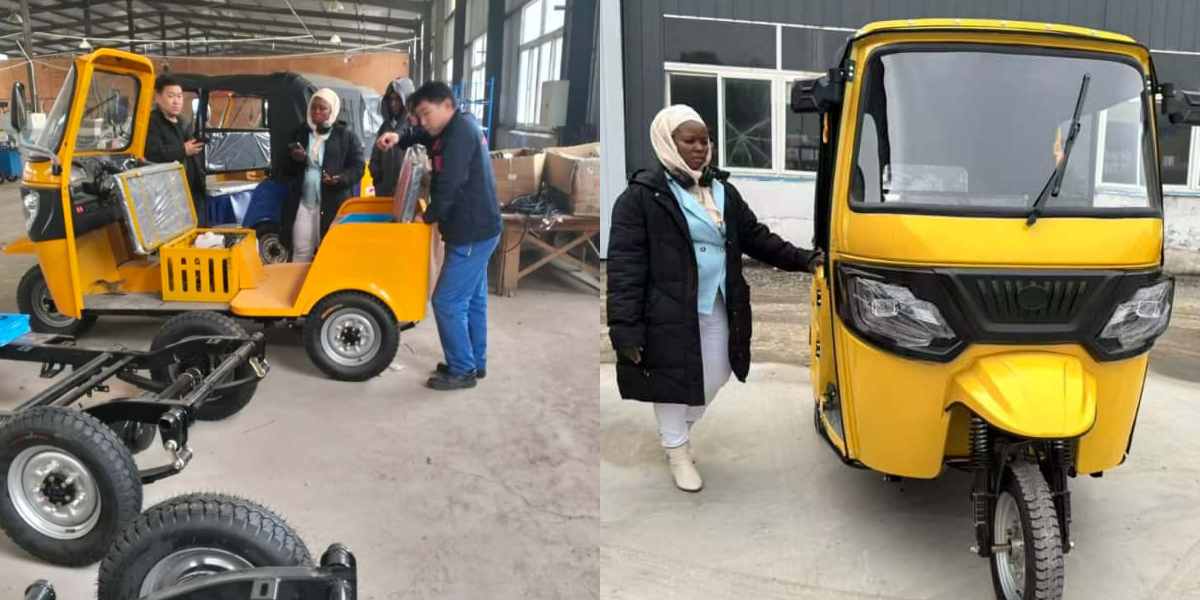
On-Site Testing: Liberian Drivers Took Charge (And Gave Honest, Critical Feedback)
We let them run the whole test. They brought 5 top drivers (each with 10+ years in Liberia) and 1 lead technician. Samuel, their most experienced driver, said: “If it works in Monrovia rain and Nimba mud, it works anywhere in West Africa.” We listened closely.
We built a real Liberia-style test track:
A deep mud pit to mimic rainy-season village roads
A flooded section with 30cm standing water
A rough, potholed dirt path like rural highways
A small repair station with only basic local tools—no fancy gear
The testing was tough, and exactly what we needed.
Samuel took the first prototype through the mud pit and stopped fast. “Too low, too weak,” he said. “It gets stuck in 10 seconds—our drivers can’t work like this.” Our engineers lifted the chassis, strengthened the suspension and boosted torque on the spot. He tried again, smiled and nodded: “Now this can go through anything.”
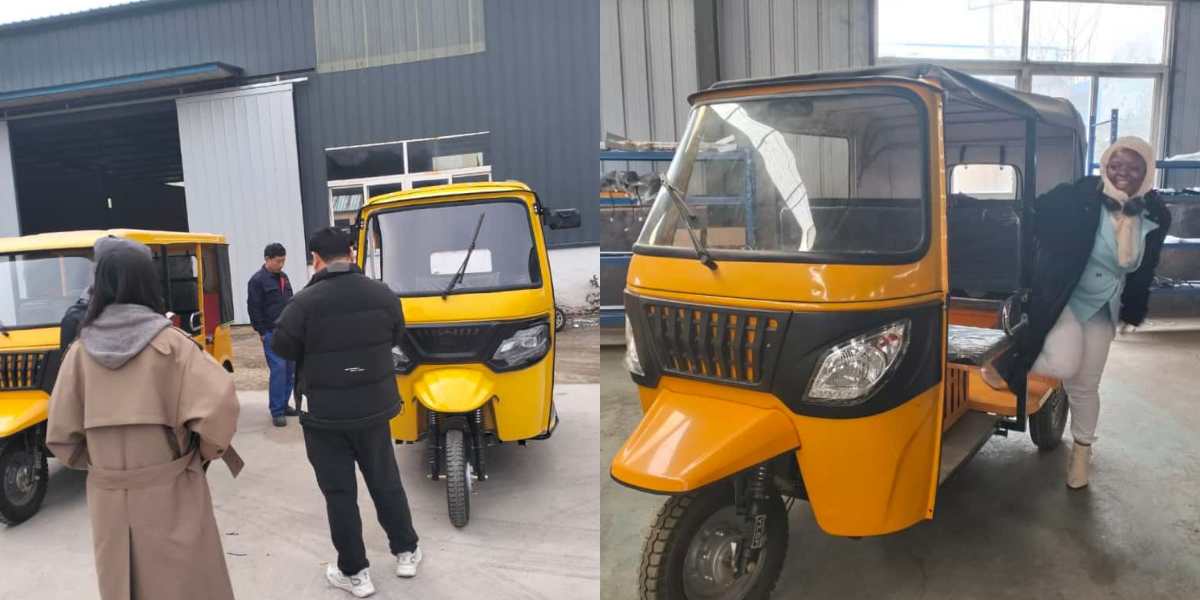
The Outcome: A Large Order & A Partner for Life
After two full days of testing, their fleet manager, Augustine, sat with us and made the call right away. “We’re signing,” he said. “These tuk-tuks are built for Liberia—not a generic market. For our rain, our mud, our heat, our drivers.”
No delays, no last-minute haggling. They approved the test results that afternoon and paid in full the next day. The first 200 custom Liberian tuk-tuks are already on a cargo ship heading to Monrovia Free Port, ready to hit roads in weeks. Once landed, they’ll go straight to drivers in Monrovia, Gbarnga, Nimba and Bong County—working within days.